

Episode Summary
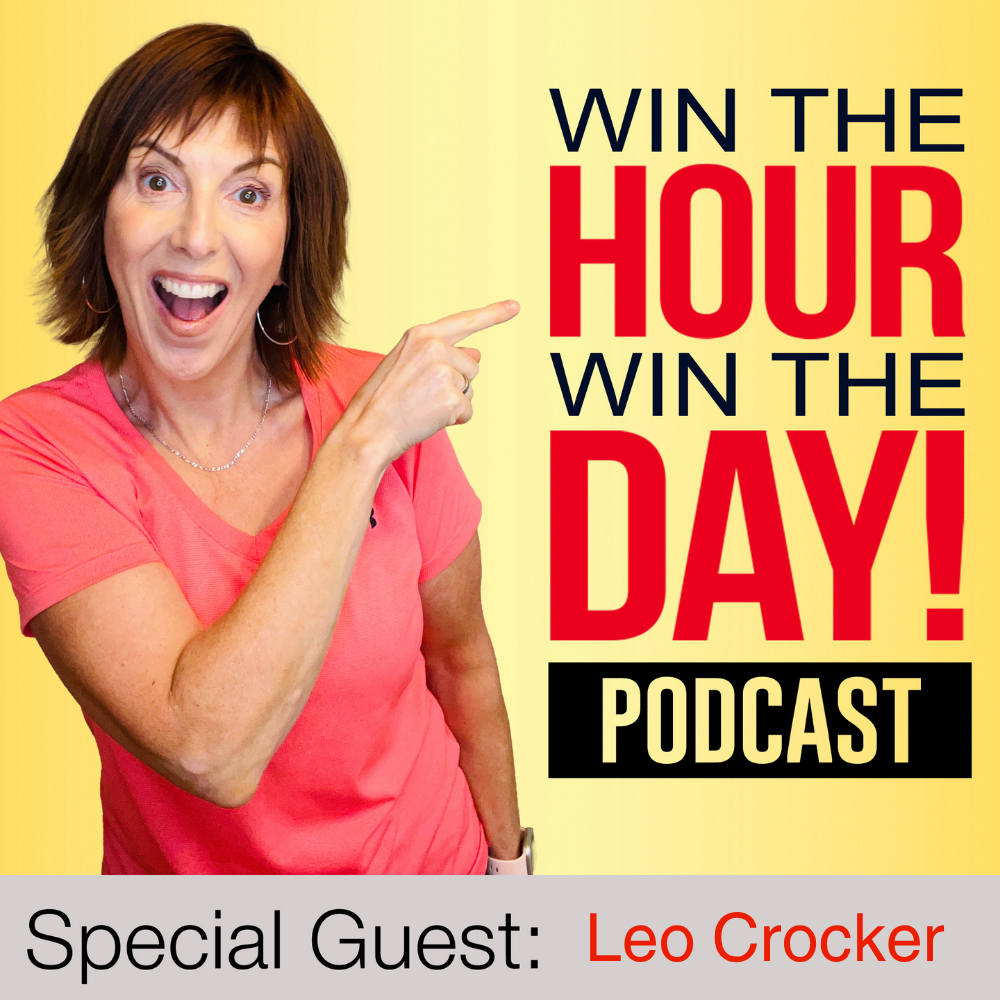
This week’s episode of Win The Hour, Win The Day Podcast interviews, Leo Crocker.
Are you trying to get clients on LinkedIn but nothing is turning into real conversations or sales? Join Kris Ward and Leo Crocker as they break down how to use LinkedIn in a simple way that builds real relationships and brings in business without cold pitching.
In this practical talk, you’ll learn:
-Why face-to-face networking is not the only way to get clients anymore.
-The simple Four C’s method for growing your LinkedIn network the right way.
-Why posting random content does not work and what to do instead.
-How commenting on posts can get you noticed by the right people.
-Why sending cold DMs often fails and how to warm them up first.
-How to grow your network without stressing about perfect targeting.
-Why helping people first can lead to clients without you asking.
Get ready for simple LinkedIn steps you can actually use right away to build trust, start conversations, and get more opportunities.
Win The Hour, Win The Day! www.winthehourwintheday.com
Podcast: Win The Hour, Win The Day Podcast https://podcasts.apple.com/ca/podcast/win-the-hour-win-the-day/id1484859150
Facebook: https://www.facebook.com/winthehourwintheday/
LinkedIn: https://www.linkedin.com/company/win-the-hour-win-the-day-podcast
You can find Leo Crocker at:
Website: https://lscagency.co.uk/
LinkedIn: https://www.linkedin.com/in/leo-crocker/
Win The Hour Win The Day
https://winthehourwintheday.com
Leo Crocker Podcast Interview
[00:00:00] Kris Ward: Hey everyone, welcome to another episode of Win The Hour, Win The Day, and I am your host, Kris Ward. And today in the house we have Leo Crocker and he is a LinkedIn Strategist and we’re gonna talk about some major misunderstandings about how to get business or slash network on LinkedIn. So let’s get right to it. Welcome to the show, Leo.
[00:00:19] Leo Crocker: Hello, how are you doing?
[00:00:21] Kris Ward: I’m good, and I’m glad to have you here. Okay. So one of your things is it’s nice to have, face-to-face and all that stuff, but I know for me, I live in a, in the country, in a rural area, so I’m not likely to get business in my area.
And I do have a lot of clients around the completely around the globe. Which is great. And, but they’re are some people that feel like it’s just not the same or you leverage better face-to-face. And face-to-face is lovely. I’m not against it. It’s just sometimes it’s not an option for some of us.
So your whole approach is yes, you can do just [00:01:00] as well without having to be physically in the same room. Is that correct?
[00:01:05] Leo Crocker: Yeah, correct. And I think you’re right there. There’s so many businesses that are moving more towards that way of working anyway. But I think there’s certain business types or perhaps certain preconceived beliefs that you always need to meet people at networking events or have that face-to-face communication upfront to build that rapport.
And while that is absolutely still a solid strategy. There are, it really doesn’t need to be that hard sometimes. And you can win some really nice sized contracts by actually starting to build those relationships online.
[00:01:33] Kris Ward: Okay, so if we’re doing that online, you have what you call the four Cs. Let’s go through those. What do the, what do those look like and how do they help us?
[00:01:41] Leo Crocker: Yeah, so the four C’s are a framework we use for the majority of our clients, which we find has worked really well, particularly now we’ve moved well into 2026, so it’s content commenting, connecting, and conversations. So to go through those briefly.
Content is obviously how you stay visible. Ideally [00:02:00] personal content, if you’re looking at LinkedIn specifically, that’s something that works very well at the moment. Okay? It really doesn’t need to go viral. It’s just about showing up consistently so that the right people recognize you. They understand what you do and they start to trust you over time.
[00:02:15] Kris Ward: Right?
[00:02:16] Leo Crocker: Secondly, you’ve got commenting. Now, this is probably the most underrated and underused part of LinkedIn and I think people don’t realize just how important it is to see success on the platform. This is how you get in front of your ideal clients without having to pitch. So when you are engaging with their posts, you are naturally putting yourself on their radar and staying top of mind in a way that feels human, not forced, can’t stress enough.
Do not try and rely on AI commenting. We’ve all received them. They’re really not great. So make sure it’s all kept nice and human. Third would be then connecting. So really simple, building a relevant network online. So not just adding people for the sake of it, but being really intentional about connecting with potential decision makers who can either become clients of yours [00:03:00] or hopefully in the future be able to introduce you to them.
And then lastly is conversation. So this is where of the above turns into opportunity. So okay, shown up. You’ve engaged, you’ve built that familiarity. Your direct messaging strategy, really, it won’t feel cold. It will feel like the natural next step. So those are the four Cs and that’s a framework which we tend to find works really well to build those long lasting relationships.
[00:03:24] Kris Ward: Okay, so now we know the framework and I think it’s a good framework. A nice clear frame of content, comment, connecting, conversation. So now let’s, now that we know where we’re going with that, let’s start at the top and go a little bit deeper. Content, how often should we post? What type of posts should we have? That’s forever changing, or is the message, just make sure you have content up in a consistent manner.
[00:03:46] Leo Crocker: Yeah, I think work with something that’s sustainable for you. Okay. A pattern that’s sustainable for you. So for me, there’s a difference between consistency and sustainability. Okay? A lot of people be consistent and they might say I’m gonna [00:04:00] consistently post every day, and then they’ll burn out.
After a month, you’ll never see them again. Whereas if something sustainable might be for you once a week. It could be twice a week, but it’s something that’s manageable, and that means that instead of doing it for one month and burning out, you can do it for years and years. So being consistent is one thing, but do finding a pattern that’s sustainable for your way of working, you’ll see far better long-term success going down that route.
[00:04:25] Kris Ward: And it doesn’t really matter, if you’re posting twice a week and you’re always posting twice a week, then that’s fine. I don’t think you need to be post posting five, seven times a week unless, if you can do that too, that’s great. But as long as it’s not two and then one, and then none, and then five.
But if you are, if you can sustain it and be, I don’t, I’m afraid to say consistent about it, then you’re in a good place.
[00:04:48] Leo Crocker: Yeah, absolutely. Absolutely. I think if twice a week works for you, then the way LinkedIn’s algorithm works is that’s gonna, that’s gonna work much better for you, okay than being more sporadic and having times where you post [00:05:00] a lot and times where you are not posting a yeah you’re ghosting LinkedIn as such. Yeah, definitely. That’s a great approach to take.
[00:05:06] Kris Ward: Yeah. Okay. And I’ve seen that where I wanted to connect with someone and I check out, like I’m commenting on the something they put, and all of a sudden I realized, oh, they did this post today. And then they haven’t posted in three months or something, and they’re like there’s no sense.
It’s like calling somebody and then you might, they might get back to you in three months. What is the point of leaving a message? So it does, it’s not that people audit your posts, but if they’re looking at it and they see that you’re so sporadic, I do think it’s not a good message.
[00:05:32] Leo Crocker: No, it’s not. And I think another point to add to that is make sure if you’re gonna post, you’re gonna post something good. Yeah. AI is being used so commonly now with LinkedIn posts. It’s really normal. There’s no problem with that. But you’ve still gotta try and make it as, as you as possible. So I think when it comes to the posting side of things, you are better off posting quality over quantity. So again, once a week with a nice high quality post is better than on off. On, off and
[00:05:58] Kris Ward: right
[00:05:59] Leo Crocker: a little bit [00:06:00] everywhere.
[00:06:00] Kris Ward: Okay. Now the one I really wanna get into is commenting. I think for so many of us, like I went through many stages, I don’t know, the seven stages of LinkedIn grieving and commenting, and I thought like in the beginning, okay, I have I done enough?
Throw them an emoji. Good. You see that? I liked it. Is that enough? Or then I would make a quick comment like, great, you saw I was good said or something like that, and sometimes there really isn’t nothing to say. Sometimes I’ve seen someone’s post, I wanna comment, but the way the post is written, I’m not, there’s just no entry level for me.
So I might say said. But back in the day, that was my thing of I would never say something as generic as good post, but it was really showing you that I had been there, but without much involvement and now I really do see a difference. That people really, first of all, remember when you po like I do remember when somebody comments on my posts.
It’s thoughtful. They’re acknowledging your existence and your work. And then I think it does really open up a conversation. ’cause then they’ll comment back. It’s on their posts. Now you’re chatting with them. It’s [00:07:00] warming it up and we’re building a relationship. And then, especially now, I know things are changing all the time, so who knows what this will be like in three months.
But even now LinkedIn is giving more acknowledgement. Like all of a sudden I’m seeing like I got a whole bunch of impressions for a comment I made. So it really it is really the easiest way of entry because I know for so many of us, the DMs and going in all that always feels awkward. Am I don’t wanna be a pitch person and yet then I’m don’t wanna be your friend either and you’re in this awkward zone that we’re all uncomfortable with.
But the commenting, I think, is a really easy place to p to play.
[00:07:35] Leo Crocker: Yeah, definitely agree. I think that it is a balance, right? You don’t wanna post something so generic that you’re not adding any value, but also you don’t want to go over the top. You can sometimes be perhaps a little bit over effusive on a topic that person knows, that you might not understand.
So do be careful with what you comment with. Again, make sure it comes across as genuine. I think you touched upon it, but link, the way LinkedIn’s algorithm works is it favors relationship [00:08:00] building. It’s a platform for networking and relationship building, not cold outreach or a cold email style strategy.
So the more you can comment on people’s posts and make sure those comment are re comments are relevant. As you say, people are then likely to reply to those comments. LinkedIn will see that there’s a relationship there looking to be formed. Next time you then post something on LinkedIn, it doesn’t matter if you posted it one second ago or seven days ago.
The person who you’ve been building relationships with in the comments are gonna still see that post front and center when they log into their LinkedIn account. So that’s a really important thing to understand right now. It LinkedIn doesn’t just favor favor how recently you posted something it favors who is gonna see that content based on, the relationships you may have built with them in the comments.
[00:08:45] Kris Ward: And it really interesting, I got a new client just this week and I wasn’t even sure how, like I thought I commented on her thing, but I wasn’t even sure and she said, and so I asked her and she said, yeah, you had left this really thoughtful, like you really chimed into the [00:09:00] conversation on one of my posts.
So it was just, I really thought like it wasn’t just one sentence thing I had chimed in or said something and then she said, I checked out your profile. And I was like, oh my gosh. We had a lot in common and she reached out to me. And Dmd me. And then even then she was like, Hey, I think we should connect.
And I’m like, okay. I was hesitant ’cause I don’t like this whole idea of oh, let’s hop on a call and see if we can collaborate and support each other. What is that? You know what I mean? I, that just usually is not meaningful to me. So even then I was a little I’m just trying to protect my calendar.
Tell me what you wanna meet about. And she’s oh my gosh. You said this and you did this and then it made me learn this about you and I think we, I may need your help. I’m like, oh, okay. So she really ambitiously pursued me and it was really, ’cause I commented on her post. Yeah.
[00:09:43] Leo Crocker: Yeah, absolutely.
And I think impressions, again, you touched upon it, but the impressions you get on your posts or your comments are, for me just as important as likes. Yeah, because. Most people that use LinkedIn actively aren’t actively posting or commenting on the platform, but they are viewing they’re silently [00:10:00] looking through the platform.
Yeah. So actually having the right people view your comments and view your posts is just as important as having them like them. Of course. Liking can increase overall reach. But really if you have a certain select niche or group of people that you wanna be seeing your posts, just having them view them, that’s a perfect example of where that can lead.
You didn’t have that sell anything, you were just you just showed up. Yeah. With the right sorts of stuff. And there you go. You can get a new client from that.
[00:10:26] Kris Ward: Yeah. Okay. So then connecting, what do we do there? We all have different philosophies on that. What’s yours about connecting.
[00:10:34] Leo Crocker: Yeah, it depends what you are looking to do and how specific you are with your targeting and the sector or sectors that you are working with. I think LinkedIn it gives you up to a hundred connection requests per week. I’m not at all suggesting you always need to use that. Yeah.
You may well find that it, as you say, there’s a certain group of people that, that you’re looking to get in front of and that’s gonna be far too many. But as I say, it’s adding people. Not for the sake of it. Be [00:11:00] intentional. Yeah. You could look at people’s profiles, understand what they do, have a look at their website, and then when you do reach out to them or when you connect with them, you have the choice to just send a blank connection request or obviously personalize that request.
Interestingly, we find for a lot of people actually sending a blank request can almost feel more intriguing and they’ll get a better acceptance rate. But if you do leave a note again, make it personable. Like you said, you can always say, I’d love to connect, thanks Kris, but you’re much better off saying, Hey, I just had a look at your case study.
Love what you did there. Or I’ve just read through the recent testimonials. Someone left on your your Google page. Fantastic work there. Be a bit more personable and intentional when you do connect with someone. And that’s another great way to increase your acceptance rate. So again, just like con content being consistent, but being sustainable with that.
Making sure that you are trying to reach out and increase your network. But in a way that’s gonna work for you. Don’t spend a month sending tons of connection requests and then doing nothing. ’cause again, LinkedIn’s not really gonna like that.
[00:11:58] Kris Ward: Yeah, so we have a purposeful [00:12:00] way of where who we’re reaching out to and that, but I have to say, I always include some sort of note or something but I do accept ones that don’t have notes but I just couldn’t imagine like just hitting a button and like, why would you? I don’t know. It just seems cold to me Hey, could you, can you let me in? But I didn’t even say, I didn’t even say who my, you opened the door and I didn’t even tell you my name. Just get step aside. I’d like to come in so I, I always leave a note, but that’s okay if you don’t. Do you also recommend every once in a while although I’m pretty purposeful about who’s on my list now.
There are times when you go back and you think, Hey, how’d this person get on my list? I don’t deal with people you know who has a job. I’m dealing with entrepreneurs. So do you from time to time, clean up your list?
[00:12:44] Leo Crocker: Yeah, you can do I think the way I view it is you never know where a connection could lead you. So
[00:12:49] Kris Ward: that’s true.
[00:12:50] Leo Crocker: If someone doesn’t look like the right job title or seniority level, or perhaps they don’t work in the right industry or sector, it doesn’t mean they don’t know someone that does. And LinkedIn it [00:13:00] shows you as well who second degree, third degree connection. So personally, unless you do feel like it’s incredibly saturated.
I would keep as many people that are already in your network as possible. You just never know where it might lead again, similar to face-to-face networking. Yeah. One introduction that might not be the right person straight away, but they might introduce you to someone else to introduce you to someone else.
[00:13:19] Kris Ward: Yeah, that, that’s a good point. ’cause I was told, then it’s messing up the algorithm like, if you don’t work with realtors then LinkedIn’s and you got all these re not all of these, but even some realtors, it’s like, it’s better to clean it up so that it’s just your ideal client, but you’re right.
It’s, that’s the magic of the world is people following you. I’ve definitely have followed people online that I don’t recommend them to somebody else. And I never used their product just ’cause it’s Hey, I don’t have a 2-year-old, but if you have a 2-year-old, I don’t have somebody with autism. But if you do, this person’s really good at dealing with ti, autistic kids, right?
[00:13:50] Leo Crocker: Yeah. Yeah. And I think we find as well. If you are reaching out to people in the right way and you are doing it in a really personalized manner, you are really taking an interest in them. Yeah. When you to direct [00:14:00] message to them, let’s say they’ll be far more likely to respond even if they’re not the right person.
We’ve seen some great wins by having people say, Hey, thanks so much. That’s a really nice thing to say I’m not the best person to speak to here, but here is the right contact, that they’re expecting your message or here’s who you can connect with instead. I would never, always rule that out, but I do think it, it’s definitely worth with LinkedIn’s algorithm having a general strategy.
If you are targeting one niche, try and stay within that as much as possible, but you don’t need to be as black and white as that.
[00:14:26] Kris Ward: Okay. That makes sense. Alright, so let’s get to conversation. Are we talking DMs? What are we talking.
[00:14:33] Leo Crocker: Yeah, so direct messages is generally the best way for us. And I think I, I don’t really the term direct messages ’cause I think it, I don’t know about you, it feels a bit cold to me, but yeah, I think for us, by the time we send a direct message, it shouldn’t feel cold.
It should either be a really warm introduction and very much not a sales pitch or something very generic that people would receive on LinkedIn every day. But secondly, even if it was some kind of pitch, which I wouldn’t really recommend in a [00:15:00] first direct message to someone, the idea should be that you’ve posted nice content, you’ve commented on their posts, you’ve warmed them up as such, you’ve shown that you’ve had a genuine interest in them.
And you’ve also shown that there’s a reason for you reaching out. Again, that’s the differentiator between someone treating LinkedIn almost like a cold email campaign and someone treating LinkedIn to actively build the right relationships.
[00:15:22] Kris Ward: So when we talk about that, here’s the struggle I have is, yes, we get pitch slapped, and we don’t want that. And then if we’re in the conversation too long, I’m not looking for new best friends to check in every day. And now we’re just chatting. So I think for so many of us, it’s almost we pull away from the DMs. If it organically happened, that’s fine, but to work the DMs, it’s almost yeah, but it’s I don’t know a car.
A car salesperson convention where everyone’s just trying to sell each other car. So then you feel like it just seems awkward in there ’cause are you trying to pitch me and do the long game and be friendly or am I trying to pitch you or are [00:16:00] we really just building a relationship so that we could circle back and talk another time? I think the parameters are very confusing for most of us.
[00:16:07] Leo Crocker: Yeah I would agree with that sometimes. I think that’s a very fair point. I think sometimes it can be confusing. Am I being sold to? Is someone genuinely just offering me value? I think ultimately, if you are gonna reach out to someone via the direct messages, you have to lead with some sort of value, and there’s a difference between some people would perceive as value and actually adding value. So if you know your audience, what might be really really valuable to them. Specifically for you, it might be your podcasts. For someone else it might be it might be a scorecard, it might be an audio book. So I think reaching out in a way that you are offering something for free and showing them that you can offer something that you genuinely believe would help them, whether they were to then work with you at any point or not. That’s the approach I would tend to take.
[00:16:50] Kris Ward: Okay. Do you though still if I, sometimes I’ll get an invite from somebody I don’t know and they’ll say, oh, I’m personally inviting you to this webinar. And I’m like you’re not [00:17:00] pers like, I know you don’t know me, right? But if you sent me something, Leo, and I know you, and I’d be like, listen Kris, we’ve got this webinar and you’ll see it being mentioned on LinkedIn.
But actually here, I’ll give you a personal invite. I’ll be like, oh, okay, fine. But I think there’s the facade of, even if I had something and I think, Hey, look, this might be a value to you. Would you like it? Can I send it to you? I so many of us have pulled back from DMs ’cause I still feel like even if I’m offering you something of value, I feel like I’m offering it to you so that you take the Scooby snack and then I can, ah, I got you a little closer. Here’s a Scooby snack. Now I’m about to catch ya. You know what I mean?
[00:17:36] Leo Crocker: Yeah and I think you don’t, it doesn’t always have to end in a sales pitch. You can, that’s true. Can send those value, add whatever it might be for you, and then keep building content and keep commenting, because as you’ve found out yourself, some people will, they’ll find you comments and they’ll reach out to you.
So actually you can find that you can skip that final step. You can genuinely just offer value and if something great. [00:18:00] If it doesn’t, then you know, you, you keep building that network and you keep offering value. I think as long as you are consistently offering that value, good things will come in some form.
[00:18:09] Kris Ward: That’s a good point, Leo. That was a really good point. Changing the framework, you’re right. You’re saying hey Kris, how about just being nice and offering value where that takes you instead of offering value to get to the next thing? That. That is a very gentle but powerful point.
Okay, got it. All right. What are some other things you feel like we’re just missing the boat when it comes to these kind of dynamics?
[00:18:34] Leo Crocker: Yeah, I think sometimes. I think there’s often a misconception again between, as I say, I don’t feel like you, you have to go in face to face every time there.
There’s plenty that can be done online to, to build strong relationships. I think you do still need to put in the graph, though. You still need to put, I think some people think that, okay, if I don’t go face-to-face networking and someone’s telling me I [00:19:00] can do this online via LinkedIn. They don’t realize that still involves, your time.
That still involves, as you say writing that content, being authoritative creating those value add documents and making sure that you are doing it for the right reasons, which is to build relationships and not to always feel like there’s that active end goal of selling, right? So I think a misconception sometimes is just people not understanding that if you are gonna do that online, you have to treat it almost as if you’re face to face.
You have to go into it with that same energy. Otherwise, I do just find that those kind of cold tactics will just slip in over time as people get lazy or they’ll get one opportunity and then they’ll think they’ve cracked it, and then they’ll try and scale really quickly and suddenly it goes from being genuine to being really automated again.
There, there’s always place for automations within business for sure. But I think if you’re gonna be reaching out to someone genuinely you’ve gotta, you’ve gotta always be doing that. You can’t deviate from that strategy.
[00:19:53] Kris Ward: That’s a good reminder. I say this a lot. I think we all forget the social and social media.
I think also too, when [00:20:00] I try to remember that when I am, ugh, I have to be on LinkedIn or I’m not feeling it or whatever. That, getting into your car and driving on a cold day to a function a half hour away, and then you’re there for an hour and that eats up your whole morning, right?
And you might get there and the face-to-face of the networking, you may not run into someone that you resonate with or whatever. And you also know when you walk in that room. When I, you say to me, Hey, my name is Leo, then I don’t start pitching you, right? So we know those things don’t work there, or sometimes they’re even more time consuming, but you can sit in your pajamas and do some networking on LinkedIn, and so I think we lose perspective really quickly.
[00:20:39] Leo Crocker: Yeah. And I actually say that to people as well. I think I say you can’t treat or you have to treat LinkedIn. Sorry, as you would face-to-face networking at
[00:20:46] Kris Ward: Right.
[00:20:46] Leo Crocker: Networking event. You wouldn’t introduce yourself and immediately say, Hey, do you want my products? Here’s what I’m selling. Yeah. Yeah. Or some people might do that, but I highly doubt they’ll see success from it.
Have to treat online in the very same way. So that’s a really good point and good [00:21:00] takeaway. You can’t just go in with a pitch because you would never do that in face-to-face networking and bring that same approach to your LinkedIn and your online strategy.
[00:21:09] Kris Ward: And I think LinkedIn is only, how lucky we are to have a platform that is just like we, you get to hop in and reach people in a DM that you know that.
I do think we all, as much as you don’t like that direct message name, there are people that are going to see the DM. I send you quicker than you’re gonna see in your email. So sometimes they do that as a shortcut. Hey Leo, I’m changing the date or something, versus it getting buried in your email. So it, it really, it does have really many assets if we treat it respectfully.
[00:21:38] Leo Crocker: Yeah, definitely. And, with email becomes harder and harder now and less, again, it’s a relationship there. And I think it’s very easy to hit someone’s spam folder or junk folder often because certainly some of the emails I get sent, I would consider spam or junk anyway.
But when it comes to LinkedIn, you can’t hit those folders. That’s positive you’ve got on that platform. Once someone’s in your network and they’ve chosen to connect with [00:22:00] you there’s a really good opportunity there. Whether it’s immediately, whether it’s in months, years, time, to, to have a good relationship with that person via a partnership or via an end client, whatever it might be.
[00:22:11] Kris Ward: Okay. So from really good takeaways and some of it’s simple, but incredibly profound and a really good reminder. ’cause I do think the sky is always falling. We get lost in the mechanics, we get lost in the almighty algorithm and how everything’s changing. So I really think the fundamentals here are definitely worth revisiting.
’cause I think we forget them so quickly. So Leo, where can people find more of your brilliance?
[00:22:34] Leo Crocker: So believe it or not, on LinkedIn is the best way to find me.
[00:22:37] Kris Ward: There we go.
[00:22:37] Leo Crocker: Yeah, we just launched a new website as well, LSC agency.co.uk. So that’s a great way to find us too. But yeah, we’re always on LinkedIn, hopefully posting some good stuff.
And that is the best place to find us.
[00:22:50] Kris Ward: Okay. Make sure you share this show with a business buddy. There’s lots of content and takeaways here that I think we overlook when we just, we get into it and we get distracted. So [00:23:00] make sure to share this episode. And Leo, thank you so very much and everyone else, we will see you on the next episode.
[00:23:07] Leo Crocker: No problem. Thank you very much, Kris. Really appreciate the time.
[00:23:10] Kris Ward: Thank you.