








Episode Summary
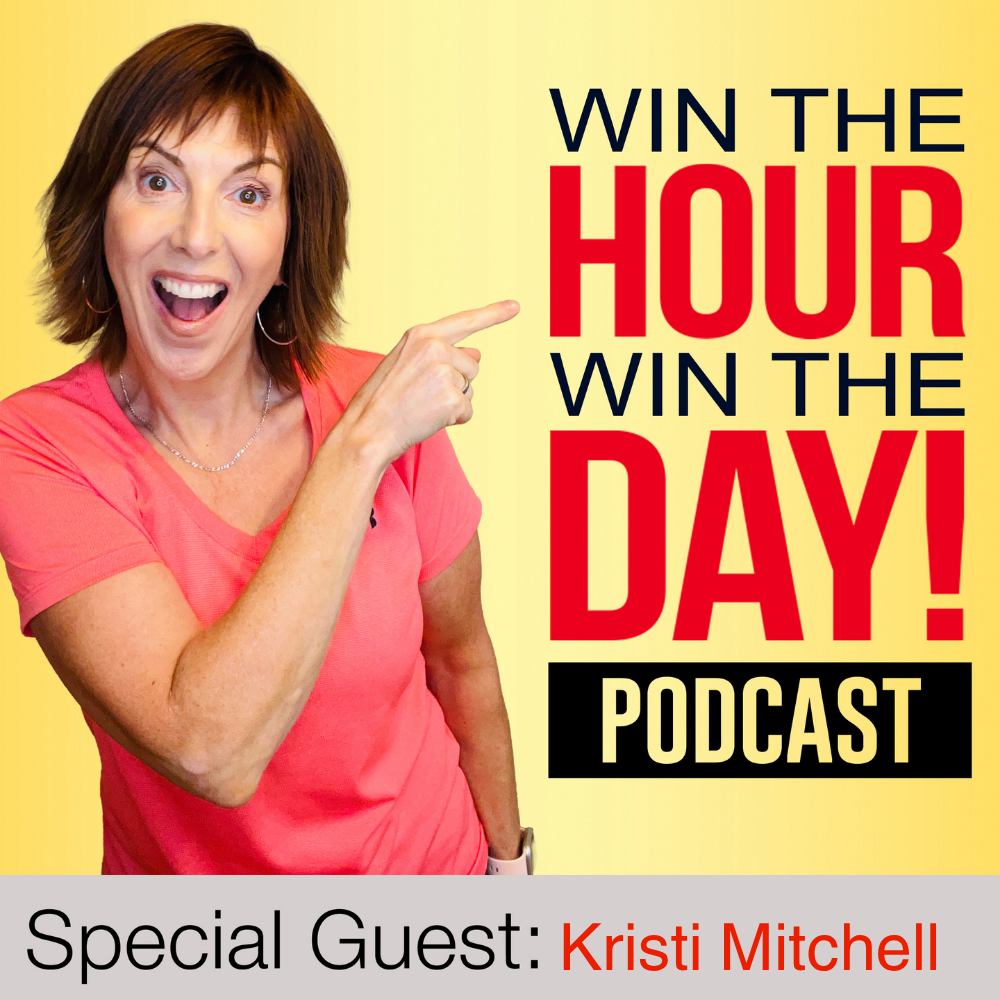
This week’s episode of Win The Hour, Win The Day Podcast interviews, Criz Tumapon.
She got thirty minutes notice.
Thirty minutes before a Zoom room with about thirty people in it, I asked her to host a session she had never run in her life.
Our Marketing Manager, Maura, had to go. Her sister went in for a basic surgery, there was an infection and a complication, and inside a couple of days it was life or death. She needed to be at that hospital day and night. We didn’t know if she’d be gone three days, three weeks or three months.
So we met as a team and split her Super Toolkits up. Criz got the Leadership Program, which is the biggest piece of it.
Criz isn’t the speaker on our team. She’s the one in the background making everything run, and she was nervous. I told her I could take the session myself, and then I told her I thought that was the wrong call, because everybody in that room already saw her as the person beside Maura, and stepping in front of her would have shrunk her.
She opened Maura’s toolkit. What to do when you come into the Zoom. Ask the VAs how they’re doing. Five minutes in breakout rooms. Housekeeping. The topic was already drafted, because drafting it in advance sits in Maura’s job bio.
I watched the replay and we all teased her, she looked like a game show host.
She was that good because she wasn’t spending anything on remembering what came next. All of it went into being the host.
Maura was gone three weeks. Her sister turned it around and she’s fine. Not one client noticed a thing.
And Criz came out of it with the line I keep repeating. Your systems get tested during an emergency, not during convenience.
Win The Hour, Win The Day! www.winthehourwintheday.com
Podcast: Win The Hour, Win The Day Podcast https://podcasts.apple.com/ca/podcast/win-the-hour-win-the-day/id1484859150
Facebook: https://www.facebook.com/winthehourwintheday/
LinkedIn: https://www.linkedin.com/company/win-the-hour-win-the-day-podcast
Win The Hour Win The Day
https://winthehourwintheday.com
Criz Tumapon Podcast Interview
[00:00:00] Kris Ward: Hey everyone, welcome to another episode of Win The Hour, Win The Day, and I am your host, Kris Ward, and today we have a treat. We have Criz Tumapon in the house. She is my Action Manager, and we are gonna take you deep behind the scenes of something that happened to us, and how we reacted, and what would this look like for you in your business. So let’s dive right into it. Let’s go. Welcome to the show, Criz.
[00:00:28] Criz May Tumapon: Thanks, Kris. Excited to be here.
[00:00:30] Kris Ward: Okay, so we had a situation. Maura, our Marketing Manager, she had a situation where her sister went into hospital for a basic surgery, and in that surgery there was an infection and a complication, and all of a sudden within a couple days it got very serious.
And we did not know what was happening with Maura, but we knew we had to support her. So what that looked like was all of a sudden we met with Maura and we didn’t… it was scary, right? It was scary. We didn’t even know if Maura’s sister was gonna make [00:01:00] it, right? So we met with Maura and said, “You gotta you gotta deal with your sister.
You gotta get her…” Y- that… She needed to be at the hospital day and night. So we met with the team, and we divided Maura’s responsibilities through handing out super toolkits so that Maura could sh- go and support her sister. She was gonna check in with us once a day just to tell us… we didn’t know if she’d be gone for three days, three weeks, or three months.
We di- we didn’t know, right? S- but we knew that it was life or death and that Maura had to be there. So in that process, a lot, I didn’t realize at the time, but a lot got handed/dumped to you. So what was that like?
[00:01:41] Criz May Tumapon: It was shocking for me at first, Kris, ’cause I haven’t even thought of doing Maura’s responsibilities- Yeah
Especially in h- handling the Leadership Program. ‘Cause imagine you handed one of her responsibilities to me. One is the Win Team Live- [00:02:00] Yeah … where we meet with the other virtual assistants for a leadership training once a month. And then you told me about that 30 minutes before the session, so I was shocked how I’m gonna do it.
I remember when you were you were thinking if I could do it or not, and then you put a lot of trust and encouragement to me. And then I remember we have a support toolkit. So upon upon you giving me the instruction of or telling me to step up for Maura-
[00:02:32] Kris Ward: Yeah …
[00:02:33] Criz May Tumapon: you didn’t even tell me what to do specifically, so I just went over into Maura’s Super toolkit ’cause there it is specifically laid out upon entering the Zoom, what she did what she wants to talk about,
[00:02:47] Kris Ward: Yeah
[00:02:48] Criz May Tumapon: at the start of the meeting asking the VAs how they are. And then we also have it in the super toolkit or in one of our process that we have the breakaway roo- rooms for five minutes- Yeah,
[00:02:59] Kris Ward: [00:03:00] yeah …
[00:03:00] Criz May Tumapon: the housekeeping updates. And then-
[00:03:02] Kris Ward: Yeah …
[00:03:02] Criz May Tumapon: there, I just took it from there, just looking at the super
toolkits.
[00:03:07] Kris Ward: Now, that is really interesting. First of all, I didn’t remember that I only gave you 30 minutes notice. Isn’t that funny? My memory doesn’t… I was like, “Oh, I didn’t notice that,” ’cause I wasn’t the one that had to step up. But also, I would like to say I felt in that case you should step up because you were the admin person.
You would be on the sidelines supporting Maura doing the admin stuff. And I said to you, ’cause this is a really important thing, I said to you, “I could jump in and do it. Michael, who also, our social media manager, could do it.” But I felt because everyone saw you as the support person for Maura, I felt- Yeah
that if you didn’t step up, it would look like we stepped over you. And so- … there, there is a super toolkit and how to do it. That’s one thing. But where you were a little cautious about is you traditionally are not the speaker, so you were a little anxious- Yes … about doing the speaking and c- and being- the host, right? So I said to you, [00:04:00] I said, “Kris, I’ll do it if you want me to do it, but I think it’s gonna minimize your role. I think you need to step up,” ’cause I think you’re the s- they’re – you’re the one that they see the second most other than Maura. So I felt naturally it would look… It would – I think it would undermine you if we did it.
So it was also in addition to you having that super toolkit, you were getting over nerves of being the host. Yeah. Yeah. And what I thought was really funny is when I watched the replay, we all teased you ’cause it looked like you were a game show host. You were so good at it. You were so good at it.
And I think you were so good at it because you’re right, you had the step by step, this is what we do five minutes in, 10 minutes in. Here’s the ins- here’s the follow through, here’s the map, here’s everything. So then you weren’t panicking and thinking, so you could have some calmness, follow the GPS of the hour, and then you could focus on just relax and work on your presentation skills, because that’s where you were most nervous.
[00:04:59] Criz May Tumapon: [00:05:00] Yes, because it really helps me build my confidence in how to- Yeah … do the Win Team Live, Kris, because of the super toolkits. It’s so easy to understand. Yeah. Because imagine, again, I’m not, I’m only notified 30 minutes before, so I don’t have enough training from Maura to lay it out and then walk me through the super toolkits that only she is using.
Yeah. But because, yeah, because it’s so clear, the instructions there are clear, so everything is easy to grasp. And the step by step process is just brief and concise, easy for me to understand how to deliver the flow of the conversation during the session.
[00:05:44] Kris Ward: Yeah, ’cause you’re right. In 30 minutes you don’t have time to go through a lot because you’re gonna be on in front of a room full of VAs, like a monthly live in 30 minutes.
You didn’t have time to read a lot of stuff. You needed a concise effective blueprint to get you through that, and [00:06:00] that’s what super toolkits offer. So we’re gonna come back in, eh, after in a minute or a few minutes and talk about the difference between super toolkits and SOP. But tell me some of the other things, which honestly I didn’t realize until I saw the replay in the live when you were talking about this the next month.
We used this as an example of how super toolkits got us through this journey, and how s- Maura has a lot of responsibility and then that all landed on your lap. And w- through that time now there was not one hiccup, there was not one ball dropped, there was not one client that felt any difference. Nothing.
Nothing got derailed, nothing got dropped because of these super toolkits and because, you follow them. So but I didn’t realize the magnitude of all the things that were on your lap when Maura was away. So why don’t you walk us through some of that? ‘Cause it was a lot.
[00:06:47] Criz May Tumapon: Yes, ’cause one of it was that because of the Super toolkits you are like it’s part of Maura’s job bio to have i- in, in, in advance the topic of what we’re gonna tackle in the WINT team [00:07:00] session.
So-
Yeah …
we al- we already have the draft of the topic. Yeah. So since you already made it in advance, I just read what’s the topic and what’s gonna be talking about in the WINT team session. So we’re not hysterical on what to talk about in the WINT team session for- Yeah … just 30 minutes ’cause it’s just laid out in there already.
Yeah. So it’s just the delivery of how I will be able to present it to the WINT team, and it’s already been laid out. So- Perfect … that’s why that made me confident on how to talk about it and deliver it in the WINT team session.
[00:07:37] Kris Ward: Okay, so the WINT team session, you did that. You rised up. You did a phenomenal job.
What are some other responsibilities that landed in your lap because Maura was away?
[00:07:46] Criz May Tumapon: Oh, aside from the win team session- Yeah … the leadership program, like for example, the daily communication with the virtual assistants- Yeah … like the
pulses.
Yeah. Like I need to check in with every individual [00:08:00] virtual assistants and check them how they are doing with their win team leaders.
Yeah.
And then aside from that, I also have done doing the report cards, ’cause-
Yeah …
since we have this leadership program, we make sure that at the end of the month we track the prog- progress of the virtual assistants, how they are participating, how they are with working with their team leaders. Yeah.
We make sure that they are well taken care of, if they need s- extra support from us, if they’re- Yeah … having concerns with their team leaders. So we we have that, the doing the report cards, which I also- Yeah … haven’t been done before.
No.
Yeah. And-
[00:08:40] Kris Ward: Yeah, so the progress reports, the daily contact the la- leadership program is a very robust program.
There’s lots of daily touch points, weekly touch points, and monthly touch points, and that was handed to you in, like you said, sometimes in 30 minutes, a moment’s notice, here you go. Yeah. In addition to your responsibilities. Now we did [00:09:00] reprioritize some of your responsibilities and say, “Okay, you have to take on this important stuff for Maura, so what do, what can we take off your plate?”
But it really did allow for everything to get done just the same as it always got done. Nobody noticed that Maura was away, because you just-
[00:09:15] Criz May Tumapon: Yeah …
[00:09:16] Kris Ward: you just hand- we just handed over the wheel to you, and the Super Toolkits took care of that. So what, from your experience, ’cause you were a VA long before you started working with us, you’ve been with us like, I don’t know, maybe six years now.
SOPs. People sometimes think that they’re all set up with SOPs. I always say they’re very clunky in nature. They’re just there to cover the liabil- usually they’re created to cover liability. They’re stale. They take a long time to make. They get outdated, all kinds of stuff. Very different than Super Toolkits, which are d- what I call dynamic breathing documents that are very simple to update.
C- you’re constantly CUEing them, creating, using, and editing them. Very easy. From your experience, what is the difference? Why would SOPs have not worked in this [00:10:00] situation? What is the problem there compared to the ease of using Super Toolkits?
[00:10:06] Criz May Tumapon: Because SOPs, Kris, are too long, and it needs to take…
It needs a lot of time, a lot of reading. You need to, like- Yeah … really understand each step because it’s very long and clunky. And in each step there, it would route you into a d- another link, and then if you click that link, another link. Yeah. So it’s, it gets confusing because it gets messy. Lots of tabs needed to be opened.
Yeah. ‘Cause it’s You need to ask a lo- many questions will be formed in your mind, like what, h- how to do this. So you wanna make sure you have a follow-up question with the higher management or the higher ups of who’s gonna, who’s… You may make some clarifications for the person using or creating the SOPs.
Unlike with the Super Toolkits, it’s very dynamic and For [00:11:00] example, if you are the end user it’s just easy to understand. You can also edit it, and then it’s just so simple. It’s u- it’s… It uses simple language, not jargons- Yeah … and SOPs. So that’s why it doesn’t take a lot of reading ’cause it’s just one glance you could understand it, ’cause I think two to six words in just a- Yeah
Single step. Because it’s so brief and concise and easy to understand that… Because it has clear, specific instructions.
[00:11:31] Kris Ward: Yeah, and to your point about the SOPs, you’re right. They often have too much information. They’ve got training mixed up inside them, and then you have to interpret it and piece it together.
Almost like when you buy a piece of furniture or something you have to put together, and you’ve got the instructions out, and then you’re reading it and then trying to make sense of it, and then you’re reading it, and you have to figure it out. And you’re right, you wouldn’t have had time to do that when I gave you 30 minutes notice.
So the SOPs, there’s just… people think more information is helpful, but then all it is everyone’s reading that information, [00:12:00] reinterpreting it, making their own process. So then even if you have a team of two or three people, everybody has their own process, and when they leave, you’re right. Maura…
If we were using SOPs, Maura would’ve had SOPs that were her own process, and then you would’ve had to ask her questions. “What do you mean about this, and what is this step, and where does this go?” Yeah. And you didn’t have to do any of that. You had w- the super toolkits, which we created there.
And, they’re something we created in our whole program. We founded those. And one of the things I talk about the SOP… Sorry, super toolkits, is the visitor test, and I say that all the time. When is really, truly a super toolkit? There’s a number of characteristics, but one of them is that anybody could come in and do that responsibility.
A visitor could come into your business and do that. Somebody could come in, and I could hand them the super toolkit for our podcast, and they could get the podcast up and out because it’s so clear. Our super toolkit is so clear. Just like to your point with Maura, you took on a lot. A… She works 40 hours a [00:13:00] week.
You took on… She’s head of the leadership program, right? A- aside from her marketing responsibilities, and you took the whole leadership program on with a moment’s notice because it was so clear. So you totally passed what I call the visitor test. You did it. You had never done it before. You did it, not a problem.
And that, I think, is really the difference, ’cause you’re right. The SOPs, there’s so many pages. There’s so ma- so much reading, so much clarifying questions. You have to break it down. You would’ve spent… Maura was gone almost three weeks before… Her sister, by the way, cliffhanger, her sister did turn it around, did get better.
She’s alive and well. All is good, and Maura came back after three weeks. But you would’ve spent all those three weeks interpreting her SOPs.
[00:13:42] Criz May Tumapon: Right. 100%, Kris.
[00:13:45] Kris Ward: Yeah. Okay. So what are some other things that now… ‘Cause you make your own, your, you’re so good at what you do as our action manager, and, you make SO- sorry, super toolkits for our, for your own work.
But I think now that you were thrown into that, what are some other [00:14:00] things that you’re like, “Huh?” What d- what… I learned a lot from that experience. I was like, “I can’t believe, how we just, we all met, we just divided things up, and nothing got missed.” So I was… It was really put to the test and it got amazing grades.
It did fantastic. What are some things that you learned from that experience?
[00:14:17] Criz May Tumapon: Yeah, it’s really 100% true that super toolkits make you inde- is very effective and can be used independently, Kris. Like-
[00:14:28] Kris Ward: Oh, yeah …
[00:14:29] Criz May Tumapon: you don’t need to depend on a person- … or for a task to be able to do it, ’cause you can understand it.
It’s just like a GPS. J- it- it’s just a one direction or one way, or simple directions that you can easily understand. It’s not like… it doesn’t get you lost upon reading it halfway or midway, because from start to the beginning it’s just a one- one way and one [00:15:00] page, Yeah … reading that’s easy to understand. So you can do it all alone by yourself.
[00:15:05] Kris Ward: Yeah, that’s a really good point. I’ve had jobs in the past where they’ve handed me really well documented heavy SOPs, and then you’re reading them and you’re trying to follow the steps, and then you think, “Oh, it’s me. I can’t figure this out,” or, “This isn’t working.
Why isn’t this working?” And then you go and you have to… You’re right. You have to ask somebody, and you have to clarify. And they say, “Oh, yeah. We used to do that, but on Tuesdays, but now on Wednesdays you need a different password.” There’s always some story, and then you’re left, you’re right, feeling beat up.
And I g- This took me an hour to get done. It should’ve taken me 15 minutes. And a big part of that is what… Another thing I talk about all the time is when people write up SOPs, they’re not doing the work, right? They’re sitting there writing all these steps up type, and then they’re missing steps.
Because I always teach in- with our clients, I teach them that, you can ma- you can be doing work that you’re doing and just create a simple Loom. And then the VA can take that Loom as you’re doing [00:16:00] the work, and you can turn it into a super toolkit. ‘Cause when you go off by memory, you make a lot of mistakes.
Because it remind me, recently I had to go into a hardware store and I had to get a new door for inside my house, and they’re asking me, “Does the door open left or right?” And I’m like, “Oh, I don’t know,” but I walk through that door all the time, right? But when you’re not doing it, you’re like, “I don’t know.”
Do you use your left hand or o- right hand to open it? Does it swing in or swing out? I don’t know, right? So that’s another thing, is too many people will sit there and think, “I’ll write a SOP on a Sunday. I’ll type it all out. Here’s all the steps.” But they’re not doing the thing as they’re doing the SOP, which is why it makes it a SOP, and they’re giving too much information.
They put training in it. Like you said earlier, one link takes you to another link, takes another link, and back again. It would’ve taken you y- it would’ve taken you three weeks to figure out what Mor- Mori- AMaura did before you could even do one thing, right?
[00:16:56] Criz May Tumapon: And let me add to it, Kris. I also realized because of that experience that your systems and processes is tested during emergency.
[00:17:06] Kris Ward: Yeah. Yeah.
[00:17:07] Criz May Tumapon: That is- Not just during convenience.
[00:17:09] Kris Ward: Yeah. Yeah. That’s a really good point, ’cause I often say to people, everybody will come to me and say okay, I always say, “If you hear yourself saying once I get past this next thing, things will be different.'” Oh yeah, we’re, I’m working long hours.
‘Cause the people I work with tend to have been in business at least 10 years. They look good on paper, they’re doing a lot of stuff, they’re the go-to person for everyone in their life, but they’re still working way more hours than they should be at this point in their journey. And they’ll say things to me like once we get that new, new client onboard, or once we get past some holidays, once we do this,” there’s always something they have to get past.
But you’re right, there is always something. There are going to be emergencies. And to me, that’s like having a car that only drives in good weather. If your business only works when everything is easy and perfect, that’s not gonna happen for you. So you’re right. Yeah. It was [00:18:00] emergency tested, and, I could’ve…
If all these things fell through the cracks, I guess I could’ve said to some of my clients, “Oh my gosh, we’re not sure if Maura’s sister’s gonna live. Can you bear with us?” But nobody knew nothing. Nobody knew anything, ’cause it didn’t matter. It’s not their business. We promised them a service. The service was not interrupted.
Nobody knew anything until it was all over, and we talked about it like this
[00:18:24] Criz May Tumapon: Yes. No task was missed, Kris.
[00:18:27] Kris Ward: No. ‘
[00:18:27] Criz May Tumapon: Cause, yeah, super toolkits can be a stabilizer for your business ’cause, because I heard from previous podcasters that they could- they say to the- to their virtual assistants that, “Oh, I can’t do this without you.
Who will do this without you?” So that says so much that their systems and processes are not that effective ’cause- Yeah … the task or the projects are dependent on the virtual assistant. ‘Cause because if you really have a [00:19:00] stable systems and processes, no matter who does the work or, for example, one is on vacation or is an emergency, another person could take over right away in just a minute.
[00:19:10] Kris Ward: That is incredibly powerful point. You’re right. That is so true. It is a stabilizer in the business. That is so well said, because you’re right. Even you, as, for lack of better word, you came to me as a VA. Now, you know we don’t use that term. I believe in team. Team is a philosophy, not a number. So to me, you’re not a VA, you are- you are the backbone of my team.
You’re the engine. You- you just bring so much energy to everything we do. Ev- you’re adored here. So as part of my team, though, as somebody who came from the VA industry, who would describe yourself as a virtual assistant, you’re saying that still is a problem, even from a VA perspective. If you’re dependent on the VA, that’s a problem.
And so for you to say that, that really lends credibility. ‘Cause you’re right, that’s what I’ve been saying to my clients is I call it the Ethel syndrome, and I call it [00:20:00] like in the 1950s when the doctor had a secretary, and the secretary knew where his keys were and blah, blah, blah, right? And he was dependent on her.
And I’ve had people say I had a really good assistant or a VA, and they were with me for two years, and then they moved on and- and nothing’s been the same.” It’s you- you were dependent. Then that person is running the show. It’s like the tail wagging the dog. And also, you can speak to this, you probably are burning that VA out.
So they’re not going to stay with you, whereas you know yourself, my team, our client’s team, they stay forever. You said to me once in a- in your job review, you said, “I hope this job lasts a lifetime.”
[00:20:37] Criz May Tumapon: Yeah. 100%, Kris.
[00:20:41] Kris Ward: Yeah. And so it’s not temporary, and why it’s not temporary is ’cause you don’t have all this pressure on you ’cause you just come in and you have a real job, and you don’t have me clinging at you and messaging you day and night and doing all these things where I’m dependent on your systems.
[00:20:57] Criz May Tumapon: And also, we also have a team, Kris, that’s very [00:21:00] who really uses the super toolkits. Yeah. So when one was away or, for example, Maura was in an emergency, so we divided Maura’s responsibilities or Maura’s super toolkits for me and the others. Yeah. Everything. There’s no burnout happening ’cause-
[00:21:16] Kris Ward: Right
[00:21:16] Criz May Tumapon: There was collaborate- team collaboration as well and the support.
[00:21:20] Kris Ward: Yeah. Yeah, even in a crisis there’s no burnout ’cause we met as a team. Yeah. We divided up her super toolkits, and then we took some off your plate. Is this a priority for the next two weeks? No, it’s not. So we redistributed everything ’cause w- there was no guessing.
There was no going, “Oh my gosh, it’s been three weeks since a email broadcast went out. We forgot. We weren’t doing that because Maura’s sister was sick.” We weren’t remembering anything. Business does not run on memory. We met, we divided the super toolkits, we decided what to reprioritize. If you’re taking on Maura’s work, then what’s coming off your plate?
We had a meeting that didn’t take 15 minutes, and we proceeded, and that was it.
[00:21:53] Criz May Tumapon: Right.
[00:21:53] Kris Ward: Yeah. Yeah. Yeah. I- Fantastic
[00:21:57] Criz May Tumapon: That was an amazing [00:22:00] experience.
[00:22:00] Kris Ward: It was tested. Okay. Oh my gosh, you are super fantastic. I really appreciate this. It… As we wrap up here, is there any last thoughts that you want people to understand about this whole thing?
[00:22:11] Criz May Tumapon: I really hope that people would be able to truly grasp what super toolkits are, and-
[00:22:17] Kris Ward: Yeah …
[00:22:18] Criz May Tumapon: they themselves will be able to use it in every in every stuff that they do in their business, ’cause it’s really easy. And I want them to feel how easy and refreshing it is. Yeah. Even though y- you are in the middle of emergency, you don’t…
You just feel calm-
[00:22:36] Kris Ward: Yeah …
[00:22:37] Criz May Tumapon: and confident.
[00:22:38] Kris Ward: Yeah.
[00:22:39] Criz May Tumapon: Y- don’t feel like your business is collapsing because one is suddenly away away and you’re not prepared for it, because your super toolkits can be a stabilizing or can be your stabilizer for your business.
[00:22:54] Kris Ward: Stabilizer. Yeah. You are that’s some- You’re right. I bring that up a lot. It’s not about [00:23:00] getting more done. It’s not about going faster and stronger. It’s about when you’re working, you’re in a calm, clear state. Like you said, you showed up to do the Live, you had the clear super toolkit, so then you could focus on being the host for that.
You weren’t trying to I’m trying to talk to people on a Zoom meeting with 25, 30 people in the room, and then I’m trying to rem- remember what I’m supposed to be doing.” You were able to take the energy and put it in the creation mode, and that’s the thing. Remembering all the stuff you’re supposed to be doing distracts from your creation mode, and you’re just running around trying to keep up.
So you’re right. It gives you… it allows you to be calm, clear, and confident. Very well said- … Criz. Very well said. Oh my gosh, this is fantastic. Okay. Thank you, everyone. Please share this with a business buddy, ’cause there’s a ton of knowledge here. You know what? Your business should support your life, not consume it, and business can be fun, and it d- and it doesn’t have to get derailed when life comes at you.
There is a easier way. So reach out to us, DM me, do whatever. I’m on LinkedIn a lot. Let’s talk soon. Thank you, Criz. That was very enlightening. [00:24:00]
[00:24:00] Criz May Tumapon: You’re welcome.